How to Declutter a Bedroom Closet in One Afternoon
Work in small sections so the project stays manageable.

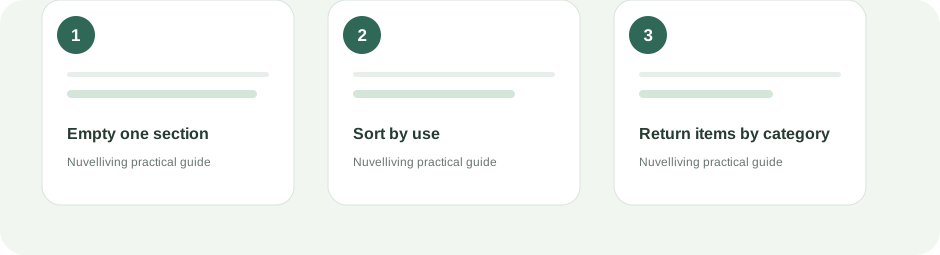
Work in small sections so the project stays manageable. The best approach depends on the materials, products, and conditions in your home. Start with the instructions for the specific item you are working with and make a small compatibility check before proceeding.
Step-by-step approach
- Set a realistic time limit
- Sort one rail or category at a time
- Create keep, repair, and release groups
- Return daily clothes to easy-to-reach areas
- Leave room for laundry and future changes
Pulling everything out at once can make a closet project harder to finish.
Work one category at a time and decide whether items fit, feel comfortable, and suit current needs.
Fold knitwear if hanging may stretch it, keep heavy items at safe heights, and store shoes clean and dry.
Use boxes only when they improve access.
Leave a little free space so the closet remains usable.
Do not store damp clothing or shoes in sealed containers. Keep heavy boxes low and stable. Donate only clean items in usable condition.
Create a decision process before removing everything
Start with one rail, shelf, or drawer rather than emptying the entire closet. Prepare separate areas for keep, repair, donate, and recycle. Check the weather and your schedule if clothing needs laundering before storage. Keep essential workwear, uniforms, and seasonal items accessible while sorting.
Troubleshooting and common mistakes
For each item, consider fit, condition, frequency of use, and whether it serves a real need. Try grouping by garment type, then by use or season. Store occasional items higher or farther back, but keep heavy objects low and avoid overloading shelves or hanging rails.
When to stop and get help
Do not discard documents, sentimental items, or expensive pieces in a rushed session. Check local donation rules and textile-recycling options; stained or damaged garments may not be accepted by charities.
Make the result easy to maintain
Leave a little free space on the rail and shelves so clothes can be returned without forcing them in. Keep a small donation bag accessible but remove it regularly; otherwise it can become another permanent pile. Review the system after a few weeks and adjust the categories that do not work.
Frequently asked question
Should I remove everything from the closet at once?
Not necessarily. Working one shelf or rail at a time keeps the task manageable and leaves space to sort items safely. A full empty-out can work if you have enough time and a clear surface, but it is not required.
Editorial note: This is general household information. Product instructions and official safety guidance take priority where they differ.