How to Organize a Small Kitchen Without Adding Cabinets
Create practical work zones and make everyday items easier to reach.
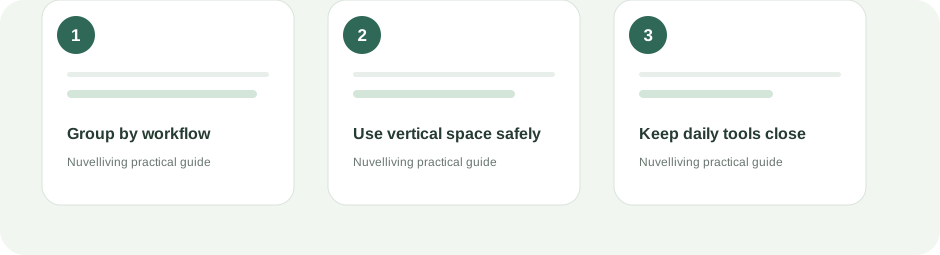
Create practical work zones and make everyday items easier to reach. The best approach depends on the materials, products, and conditions in your home. Start with the instructions for the specific item you are working with and make a small compatibility check before proceeding.
Step-by-step approach
- Empty one cupboard or zone at a time
- Group items by the task they support
- Place daily-use tools near their point of use
- Use vertical organizers only where stable
- Review the layout after one week
A compact kitchen works better when it follows the sequence of daily tasks.
Group preparation tools, cooking equipment, serving items, and cleaning supplies separately.
Keep heavy cookware on low shelves and everyday dishes near the dishwasher or drying area.
Measure shelves before buying organizers; extra containers can become clutter of their own.
Leave a clear preparation surface and keep appliance vents and outlets unobstructed.
Do not store chemicals beside food. Secure wall-mounted rails properly and avoid hanging heavy items above work areas. Keep exits and walkways clear.
Organize around the work sequence
Map the main tasks—preparing food, cooking, washing up, and storing groceries—and keep the tools used for each task close to where it happens. Put everyday dishes near the dishwasher or drying area, cooking utensils near the hob, and prep tools near the main work surface.
Troubleshooting and common mistakes
Use vertical space only where shelves and wall fixings are rated for the load. Group small items in trays or bins that can be lifted out together. Keep heavy cookware low, reserve the easiest-to-reach shelf for daily essentials, and leave enough clear counter space to prepare food safely.
When to stop and get help
Do not store heavy objects above head height or place items where they can fall onto a hob. Keep cleaning chemicals away from food and food-contact equipment. Avoid adding organizers that block ventilation or make cabinets difficult to clean.
Measure before buying organizers
Measure cabinet width, depth, height, hinges, and pipe or appliance obstructions before buying pull-outs or racks. A product that technically fits may still block a door or make items harder to reach. Try rearranging what you already own before adding more containers.
Frequently asked question
Should I buy matching containers to organize a small kitchen?
Matching containers can help in some cupboards, but they are not the first step. Measure the space, group items by task, and try the containers you already own. Buy only organizers that solve a specific access or storage problem.
Editorial note: This is general household information. Product instructions and official safety guidance take priority where they differ.