How to Clean Window Tracks and Sliding Door Grooves
Vacuum grit before wiping so abrasive particles are not dragged along the finish.

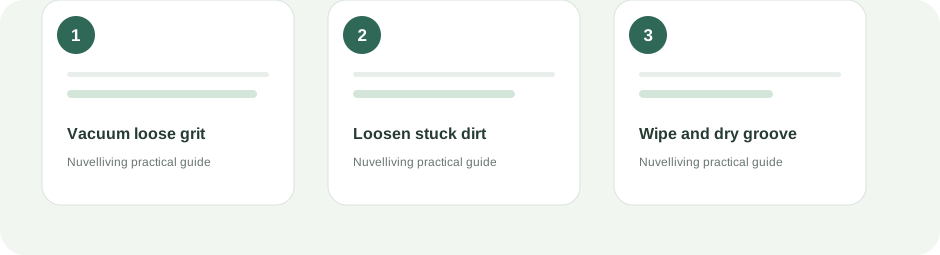
Vacuum grit before wiping so abrasive particles are not dragged along the finish. The best approach depends on the materials, products, and conditions in your home. Start with the instructions for the specific item you are working with and make a small compatibility check before proceeding.
Step-by-step approach
- Open the panel safely within its normal travel
- Vacuum loose dust and grit
- Brush corners and drainage openings
- Wipe with a compatible mild solution
- Dry and check the drainage path
Window and sliding-door tracks collect dust, insects, and grit.
Vacuum loose debris first, then use a soft brush for corners.
Wipe with mild soapy water only if compatible with the frame material.
Keep drainage openings clear because they may be designed to let water escape.
If the panel still sticks, inspect for visible damage and consult the manufacturer rather than forcing heavy glass panels.
Do not lean outside or stand on a sill. Keep fingers away from pinch points. Do not block drainage openings.
Remove dry debris before introducing water
Vacuum loose grit with a narrow attachment, then use a soft brush to lift debris from corners. Wipe the track with a damp cloth and a small amount of mild cleaner compatible with the frame finish. Cotton swabs or a soft detailing brush can reach narrow channels.
Troubleshooting and common mistakes
Use as little water as practical. Check whether the track has drainage openings and keep them clear. Dry the channel and inspect rollers, weather seals, and the lower frame for damage. If the window manufacturer specifies a lubricant for rollers, use only that product and apply it sparingly.
When to stop and get help
Do not block drainage holes with cloth, sealant, or lubricant. Avoid pressure washing and harsh solvents, which can force water into the frame or damage finishes. A window that binds, drops, or has damaged hardware needs repair rather than more force.
Check drainage after cleaning
Pouring water into a track is not a universal test because some window systems are not designed for that. Instead, inspect the visible drainage slots and consult the window maker’s instructions. If water enters the wall or frame, stop and have the drainage path assessed.
Frequently asked question
Should I lubricate the window track after cleaning?
Only if the window manufacturer specifies lubrication and identifies the correct product and application point. Some tracks should remain dry, and the wrong lubricant can attract dirt or damage components.
Editorial note: This is general household information. Product instructions and official safety guidance take priority where they differ.