How to Remove Hard-Water Stains From Bathroom Fixtures
Choose a cleaner based on the material, not just the strength of the deposit.
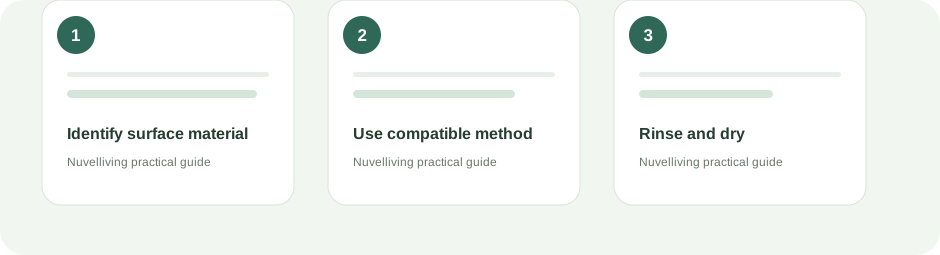
Choose a cleaner based on the material, not just the strength of the deposit. The best approach depends on the materials, products, and conditions in your home. Start with the instructions for the specific item you are working with and make a small compatibility check before proceeding.
Step-by-step approach
- Identify the surface material
- Wipe away loose residue with a soft cloth
- Choose a compatible surface cleaner
- Follow the label contact time
- Rinse and dry thoroughly
Mineral deposits commonly form around taps, shower screens, and sink edges.
The same descaler can be suitable for ordinary glass but damaging to natural stone or a specialty finish.
Check the surface maker’s care guidance first.
For compatible materials, use a product labeled for that surface, apply it as directed, and avoid letting it dry.
Rinse thoroughly and dry with microfiber to reduce water spots.
Do not use acids such as vinegar on marble, limestone, or other acid-sensitive stone. Never mix descalers with bleach. Test in a discreet area and avoid metal scrapers.
Identify the fixture finish before choosing a descaler
Check the fixture maker’s instructions and identify whether the surface is chrome, stainless steel, coated metal, stone, or another finish. Start with a soft cloth and mild soap. If a descaler is appropriate, choose one labelled compatible with that exact material and test a hidden area first.
Troubleshooting and common mistakes
Apply only for the contact time stated on the product label, then rinse thoroughly and dry. For aerators or removable parts, follow the manufacturer’s removal and cleaning instructions. Prevent new spots by wiping water droplets from the fixture after use.
When to stop and get help
Acidic descalers can damage natural stone, some plated finishes, grout, and seals. Never mix descaling products with bleach or other cleaners. If the finish changes during a spot test, stop immediately and rinse as directed.
Do not confuse mineral deposits with surface damage
If a mark remains after a compatible, label-directed treatment, the finish may be etched, scratched, or worn rather than covered in scale. Repeating an acidic treatment can make damage worse. Stop and ask the fixture maker or a surface-care specialist when the material is uncertain.
Frequently asked question
Can I use vinegar on natural stone?
Do not use acidic cleaners on natural stone unless the stone supplier explicitly approves them. Acids can etch some stone surfaces. Use a cleaner labelled for the exact stone type and follow the supplier’s maintenance advice.
Editorial note: This is general household information. Product instructions and official safety guidance take priority where they differ.