How to Clean Grease From Kitchen Cabinets
Remove cooking film without damaging the cabinet finish.
Remove cooking film without damaging the cabinet finish. The best approach depends on the materials, products, and conditions in your home. Start with the instructions for the specific item you are working with and make a small compatibility check before proceeding.
Step-by-step approach
- Identify the finish and check its care instructions
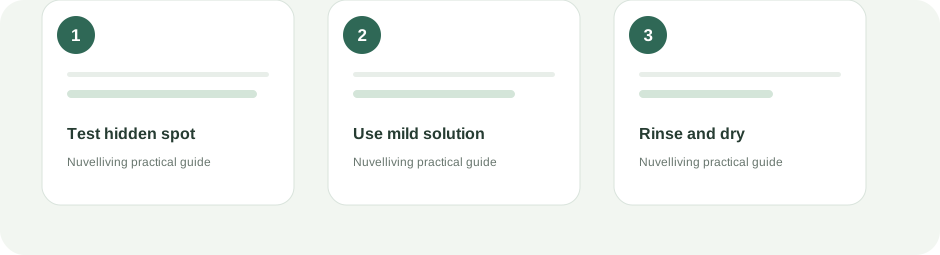
- Test a mild solution in a hidden spot
- Wipe small areas with a damp microfiber cloth
- Remove soap residue with a clean damp cloth
- Dry seams and edges immediately
Painted wood, laminate, thermofoil, and natural wood do not respond identically to moisture or cleaners.
Start with warm water and a little mild dish soap, using a well-wrung cloth rather than soaking the surface.
Work with the grain where visible.
For stubborn residue, repeat the gentle process instead of immediately reaching for a concentrated degreaser.
Use only products approved for the finish, and keep liquid away from joints and exposed edges.
Avoid abrasive pads and harsh solvents. Never mix bleach with ammonia or acids. Stop if the finish softens, changes color, or begins to lift.
Identify the cabinet finish first
Check the cabinet maker’s care instructions and identify whether the surface is painted, laminate, wood veneer, or unfinished wood. Test any cleaner in a hidden area. Start with a soft cloth dampened with warm water and a small amount of mild dish soap, then work in small sections.
Troubleshooting and common mistakes
Wipe with a second cloth lightly dampened with clean water to remove soap residue, then dry immediately—especially around edges, seams, and handles. For textured profiles, use a soft brush without forcing liquid into joints. Clean handles separately because they collect oils from hands.
When to stop and get help
Avoid soaking wood or directing steam at cabinet doors. Strong degreasers, solvents, and abrasive pads can dull finishes or lift coatings. If grease has penetrated unfinished or damaged wood, consult a cabinet-care professional instead of escalating to harsher chemicals.
Sources and further reading
Biological Contaminants and Indoor Air Quality (official guidance)
A low-risk test saves the finish
Use the least aggressive method first and allow the test patch to dry fully before judging the result. Some finishes look acceptable while wet but show dulling, colour transfer, or swelling after drying. If the finish changes, stop rather than repeating the treatment over the whole door.
Frequently asked question
Can I use a degreaser on every cabinet finish?
No. A product that is suitable for laminate may damage paint, veneer, or unfinished wood. Identify the finish, read the cleaner label, and test a hidden spot. If the finish is unknown or valuable, ask the cabinet maker before using a stronger product.
Editorial note: This is general household information. Product instructions and official safety guidance take priority where they differ.