How to Clean a Ceiling Fan Without Spreading Dust
Capture dust carefully and use stable access equipment.
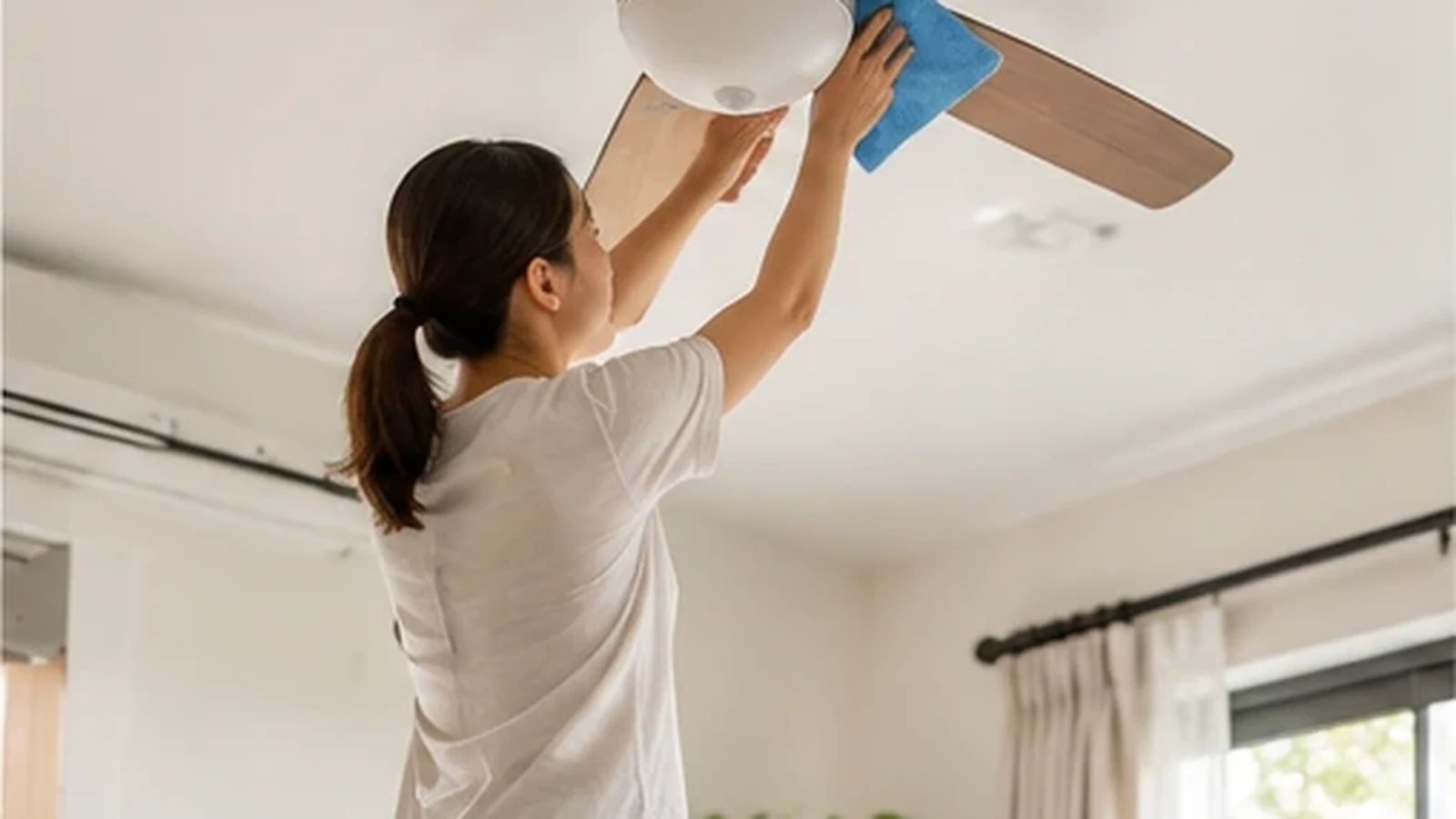

Capture dust carefully and use stable access equipment. The best approach depends on the materials, products, and conditions in your home. Start with the instructions for the specific item you are working with and make a small compatibility check before proceeding.
Step-by-step approach
- Switch the fan off and wait for blades to stop
- Protect nearby furniture and floors
- Use a stable step ladder on level ground
- Wipe blades gently with a suitable cloth
- Inspect for visible damage before use
Dust collects on the upper surface of fan blades.
Switch the fan off and wait until it stops completely.
Use a stable ladder on a level floor and avoid overreaching.
A fan-blade duster or slightly damp microfiber cloth can capture dust.
Support the blade gently and avoid bending it.
Keep moisture away from the motor housing and electrical openings.
Never clean a moving fan. Do not stand on chairs or unstable objects. Stop using the fan if a blade is cracked or visibly loose.
Control dust before wiping
Switch the fan off and wait until the blades stop. If the fan is high or difficult to reach safely, use a stable step platform and ask another adult to steady it, or hire help. A pillowcase slipped carefully over each blade can contain loose dust while you wipe; support the blade rather than pulling or twisting it.
Troubleshooting and common mistakes
After removing loose dust, wipe each blade with a slightly damp microfiber cloth and dry it. Clean the motor housing with a dry or manufacturer-approved cloth, keeping moisture away from electrical openings. Check that blade brackets and visible fasteners do not appear loose, but do not dismantle electrical parts.
When to stop and get help
Never clean a moving fan. Do not stand on chairs, boxes, or unstable furniture. If the fan wobbles, makes new noises, or has loose mounting hardware, stop using it and arrange proper inspection rather than trying to balance it while running.
Reduce the next dust build-up
A regular light dusting is easier than removing a thick layer. Consider the room conditions: open windows, nearby fabric, and how often the fan is used can affect how quickly dust accumulates. Set a reminder that matches what you actually observe rather than following an arbitrary calendar.
Frequently asked question
Do I need to remove the fan blades?
Usually not for routine dusting. Removing blades can introduce electrical and mounting risks and may affect balance. Clean accessible surfaces with the fan switched off; leave disassembly or repair to a qualified person when needed.
Editorial note: This is general household information. Product instructions and official safety guidance take priority where they differ.