How to Store Fresh Herbs So They Last Longer
Sort tender and woody herbs before choosing a storage method.
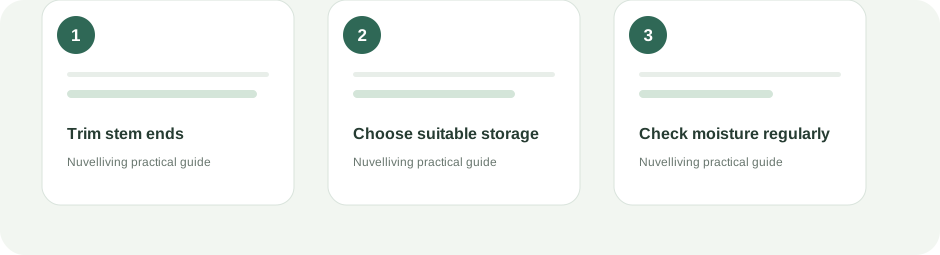
Sort tender and woody herbs before choosing a storage method. The best approach depends on the materials, products, and conditions in your home. Start with the instructions for the specific item you are working with and make a small compatibility check before proceeding.
Step-by-step approach
- Remove damaged leaves
- Separate tender herbs from woody herbs
- Trim stems where appropriate
- Choose a suitable container and temperature
- Check for moisture and spoilage regularly
Tender herbs such as parsley and cilantro often benefit from upright storage with a little water, while woody herbs such as rosemary and thyme may keep better loosely wrapped in the refrigerator.
Basil is sensitive to cold and may need a different approach.
Keep leaves from sitting in standing water, remove spoiled pieces, and avoid compressing bundles.
Freeze suitable surplus herbs in small portions when you cannot use them in time.
Storage varies by herb and refrigerator conditions. Discard herbs with mold, slime, or an off smell. Keep ready-to-eat herbs separate from raw meat and seafood.
Treat tender and woody herbs differently
Remove damaged leaves and excess moisture, but do not wash herbs for storage unless you can dry them thoroughly. Tender herbs may keep better with stems in a small amount of water and a loose cover, while woody herbs often suit a dry, breathable wrap. The best method varies by herb and refrigerator conditions.
Troubleshooting and common mistakes
Keep herbs away from areas that freeze or become wet from condensation. Check the container every day or two, remove leaves that turn slimy, and refresh water when using a jar method. Wash just before use unless a trusted recipe or food-safety instruction says otherwise.
When to stop and get help
Do not store herbs in a sealed container while wet. Discard leaves with visible mold or decay, and do not assume an herb is safe because only a small part looks damaged.
Use the herb condition as your guide
Check stored herbs when you open the refrigerator. Remove leaves that are slimy or decaying and adjust the wrapping if condensation is collecting. Different herbs respond differently, so a method that works for parsley may not suit basil or rosemary.
Frequently asked question
Should all fresh herbs be stored in water?
No. Tender leafy herbs and woody herbs can need different storage conditions. Use a method suited to the particular herb, avoid trapped moisture, and check stored leaves regularly for decay.
Editorial note: This is general household information. Product instructions and official safety guidance take priority where they differ.