How to Find and Remove Persistent Refrigerator Odors
Find the source of the smell before relying on an odor absorber.

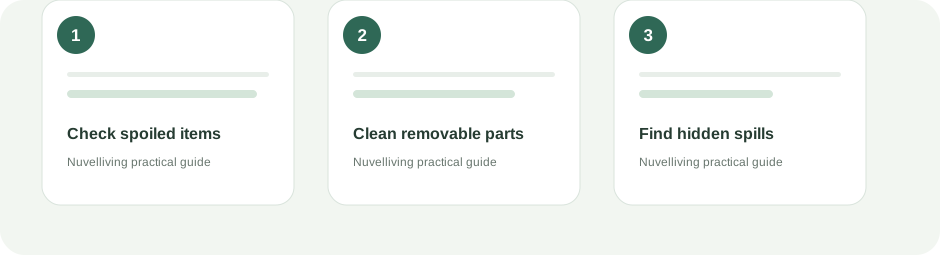
Find the source of the smell before relying on an odor absorber. The best approach depends on the materials, products, and conditions in your home. Start with the instructions for the specific item you are working with and make a small compatibility check before proceeding.
Step-by-step approach
- Check leftovers and opened packages
- Inspect drawer tracks and shelf edges
- Wash removable parts as directed
- Wipe seals and interior surfaces
- Review food storage habits
A deodorizer may mask a smell without removing its source.
Check produce, leftovers, and opened containers first.
Remove shelves and drawers only as the appliance manual allows, then wash them with warm soapy water.
Wipe drawer tracks, door bins, and seals, and dry carefully.
If the odor seems to come from a drain or drip tray, consult the manual rather than dismantling panels.
Do not taste questionable food. Keep raw meat and seafood sealed below ready-to-eat foods. Investigate persistent odors or leaks with a qualified technician.
Find the source before masking the smell
Check opened containers, produce drawers, drip trays if accessible, and forgotten items at the back. Remove food that is spoiled or leaking and clean the affected shelf according to the refrigerator manual. Wash removable bins with dish soap and dry them before replacing.
Troubleshooting and common mistakes
Check door seals and make sure containers are closed. Keep raw foods contained and separated from ready-to-eat foods. If the odor remains after cleaning, inspect the drain or drip-pan guidance in the manual; some components should only be serviced by a technician.
When to stop and get help
Do not mix bleach, ammonia, vinegar, or other cleaners. Never use fragrance to conceal a possible spoiled-food or electrical odor. If the smell resembles burning plastic or wiring, unplug the appliance if safe and seek service.
Check the less obvious places
Odors can remain in drawer runners, door bins, seals, or a drain area even after shelves are wiped. Use the refrigerator manual to identify user-cleanable parts. Do not remove panels or reach near electrical components to search for a smell.
Frequently asked question
Should I use baking soda to remove refrigerator odors?
An odor absorber may help with mild residual smells, but it cannot replace finding and removing spoiled food, spills, or a drainage problem. Clean the source first and follow the refrigerator maker’s instructions for interior care.
Editorial note: This is general household information. Product instructions and official safety guidance take priority where they differ.